 |
| Our view from the Club Level as the SF Opera Company's performance of "Turandot" was simulcast at AT&T Park. |
Showing posts with label China. Show all posts
Showing posts with label China. Show all posts
Sunday, September 25, 2011
Turandot or Turandon't? San Francisco Opera at the Ballpark


Wednesday, March 24, 2010
Who won the Cold War? The answer may surprise...
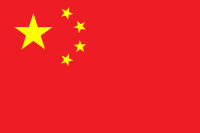 If there was a victor declared in the Cold War, China would have to be considered a contender for the title. No other major country came out of the undeclared conflict with as few scars — psychological and structural — as China. While the United States suffered through internal crises such as the Vietnam War and the growth of the military-industrial complex, and the Soviet Union simply ceased to exist after the Cold War, China managed to successfully developed during the conflict from a backwater into a modern (if still backward provincially) industrial state with enormous potential. While facing vehement opposition from first one side in the Cold War, then the other, the Chinese were eventually able to play both sides against the middle and forward their own ends, while sometime forwarding those of the United States or Soviet Union.
The People’s Republic of China suffered few psychological scars during the course of the Cold War because it suffered most of them during its formation. The country was radically changed almost literally overnight from a near-feudal state to socialism. The flexibility engendered from such a change was to come in handy as China was forced to develop in the wake of changing geo-political realities during the Cold War era. As benefiting a nation that had the world’s largest population and one of the largest territorial area, neither the Soviet Union nor the United States could afford to ignore China. Neither did — both nations had periods of pragmatic friendship and outright warfare with China between 1950 and 1990.
After China was “lost” in 1949, the United States felt threatened by almost a billion new communists. The Chinese intervention in the Korean War and Mao’s early alliance with the USSR only served to exacerbate the perceived problem. America’s support of the Kuomintang leadership on Taiwan led into disagreements that still echo to this very day. Every crisis in the Taiwan Straight, such as the persistent shelling of offshore islands like Quemoy and Matsu, threatened to escalate into open warfare among Chinese, Taiwanese and American forces. Eventually, the United States and China realized the advantages of working together against a mutual adversary, the Soviet Union. Rapprochement began in the early 1970s with such endeavors as secret state visits and ping-pong tournaments. It later grew into strong economic links. By the end of the Cold War, although the United States was once again healthy socially and economically, it had to face the fact that America’s interests had been severely overextended, and its psyche bruised, by stalemate in Korea, an effective loss in Vietnam and other legacies of the Cold War.
 On the other side, as Sino-Soviet relations deteriorated in the late 1960s and early 1970s, the geo-political situation reversed completely. Chinese rapprochement with the United States advanced rapidly, as the two nations found common cause in their antipathy toward the Soviet Union. Border clashes between the USSR and China, sometimes involving whole divisions of troops, symbolized the rapid deterioration of relations after the Soviet Union was de-Stalinized. Mao Tse-Tung (right) took de-Stalinization as a threat to his own style of leadership and proclaimed himself the new leader of world revolution accusing Khrushchev of being an “American stooge.” Rivalry between the Communist powers became ideological as well as personal. In response, Sino-American cooperation increased dramatically, and — partially as a result of having to confront the West (and its massive and technologically advanced arsenal) as well as China simultaneously— the Soviet Union also overextended its strength, which contributed significantly to the final collapse of the Soviet empire in the late 1980s and early 1990s.
China meanwhile, emerged from the Cold War with a massive industrial economy, as new western markets opened to its manufactured goods. By moving forward with their own policies and alternatively confronting both the Soviet Union and United States when it suited their needs, Chinese leaders were able to position their country into a spot where China could move ahead in the post-Cold War area. By alternatively working with both East and West, China was able to become the important state its population warranted, and not just a “paper tiger” as Mao characterized “imperialist” countries.
Monday, September 22, 2008
Le programme de l'espace de la Chine a lieu derrière les temps
 Quand la Chine, en 2003, a lancé son premier «taikonaut» dans l'espace, j'ai écrit une lettre au journal local énonçant simplement la «Bienvenue à 1961.» La petite capsule, avec faire simple d'occupant de seules 14 orbites, a semblé underwhelming pour une grande nation comme la Chine.
Cinq ans après, probablement dès que cette semaine, le Chinois lancera une capsule de trois-homme dans l'espace - partie d'un programme qui peut voir un homme chinois sur la lune en 2017. Il semble à moi comme la Chine encore gaspille des ressources sur examiner la technologie déjà prouvée au lieu de la poussée pour de plus grands avantages - tous au nom d'un certain sens mal orienté «de fierté nationale.»
Je suis un partisan fort d'exploration de l'espace, mais les ressources scientifiques potentiellement grandes de la Chine mieux seraient dépensées joignant un projet continu tel que projet international de station spatiale ou le de «Constellation» des NASA, qui non seulement atteindra par la suite la lune mais également Mars. La Chine devrait aider à pousser les limites de ce que l'humanité peut faire dans l'espace, plutôt que réchauffé ce que les Etats-Unis et l'URSS ont fait dans les années 60.
(Photo courtesy AP/Cornell University)
Subscribe to:
Posts (Atom)